
Why Water Damage Often Gets Worse Over Time
Call Now – (404) 900-3852
CALL US BEFORE CALLING YOUR INSURANCE COMPANY – Let us work directly with your insurance company to get your loss covered.
Homeowners dealing with water intrusion after a storm, a burst pipe, or an appliance failure usually underestimate how quickly the affected area grows because much of the damage occurs in walls and under floors, where it isn’t visible. The window for effective water removal is short. Tidal Wave Response offers water damage restoration with the equipment and urgency the situation demands. Keep reading to find out how water damage progresses and why the timeline matters more than anything else.
How Water Moves Through Building Materials
Water doesn’t stop moving when it finds a surface. It follows the path of least resistance through porous materials. It works horizontally along subflooring, vertically down wall cavities, and diagonally through insulation batts until it reaches a barrier it can’t penetrate. A single burst pipe can saturate materials two or three rooms away.
Different materials absorb and transfer moisture at different rates. Drywall wicks water upward at roughly 1 inch per hour during the first few hours of contact. Concrete blocks absorb moisture for a while, then release it slowly into adjacent framing. Fiberglass insulation holds water against wood studs for days, keeping that wood wet long after the puddles are gone.
The migration problem is why measuring only the visible wet spot gives an incomplete picture. Professionals use moisture meters and thermal imaging cameras to map where water has traveled inside building assemblies. Without mapping, cleanup only takes care of the surface while the hidden saturation continues to degrade materials underneath.
Mold Becomes a Serious Problem in 24 to 48 Hours
Mold spores are present in virtually every indoor environment. They’re dormant under normal conditions, but when they are exposed to sustained moisture, they activate quickly. Under the right temperature and humidity conditions, mold colonies begin establishing within 24 to 48 hours of water exposure. By 72 hours, growth is visible on drywall paper, wood framing, and insulation facing. This timeline is important because mold remediation is a separate, regulated process from water damage restoration in Johns Creek, GA. Once mold is present, the scope of the project expands:
- Affected materials require containment before removal to prevent spore spread.
- Remediation must follow EPA guidelines and, in many states, specific licensing requirements.
- Air quality testing may be required before clearance.
Starting water removal within the first few hours doesn’t guarantee zero mold risk, but it cuts the probability dramatically.
What Happens to Drywall, Insulation, and Wood Framing When Water Sits Too Long
Drywall is inexpensive to replace but destructive when saturated. The gypsum core loses structural integrity within hours of full saturation, and the paper facing becomes a food source for mold within days. Drywall that’s been wet for more than 24 hours usually isn’t salvageable and needs to be cut out and replaced.
Insulation behaves differently depending on type. Fiberglass batts don’t dry effectively in place because they trap water against the framing behind them. Spray foam is more resistant, but it can harbor moisture at seams and penetrations. Saturated insulation that stays in the wall cavity continues holding framing members at high moisture content, which is where structural problems begin.
Wood framing absorbs moisture, which softens wood fibers, reduces load-bearing capacity, and sets the stage for rot fungi that cause irreversible wood decay. Joists and studs that stay wet for a week or more may require sistering or full replacement.
How Delayed Water Removal Affects Structural Integrity
A house that dries out within 48 hours faces a very different recovery than one that stays wet for five to seven days. Water that reaches a concrete slab exerts hydrostatic pressure from below, which can lift flooring adhesives, crack tile grout lines, and contribute to long-term slab movement.
OSB subfloor panels are extremely vulnerable. OSB swells at the edges when wet, which creates the ridging visible through finished flooring. Extended saturation causes the panel to delaminate, which means the structural connection between the subfloor and the joists below weakens.
Load-bearing walls with wet bottom plates face similar deterioration. The bottom plate sits on the foundation or subfloor and is among the first components to stay wet since water pools at low points. When that framing member softens, the wall above it loses proper bearing support. Catching water intrusion early and extracting moisture quickly keeps the structural members intact and avoids the engineering assessments that accompany compromised framing.
What Professional Water Damage Restoration Fixes That DIY Cleanup Misses
Consumer-grade equipment doesn’t generate the airflow or dehumidification capacity required to do the job correctly. It dries the air in the room while materials stay saturated behind the walls.
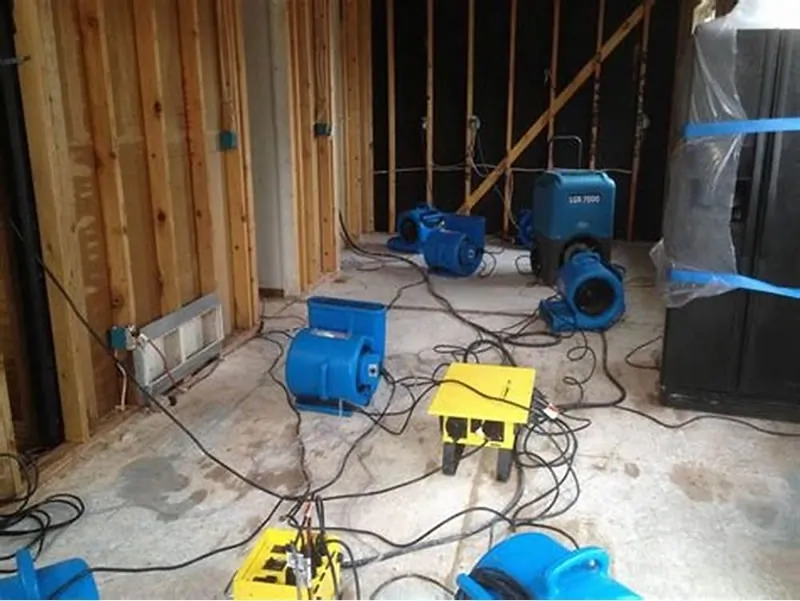
Professional water damage restoration uses truck-mounted or high-capacity extraction equipment, industrial air movers, and commercial dehumidifiers sized to the affected square footage. Crews establish drying targets based on material type and monitor moisture readings daily until materials reach acceptable levels. The process takes 3 to 5 days when started promptly.
The documentation that comes with professional water removal also matters if an insurance claim is involved. Adjusters require moisture logs, equipment records, and photo documentation at each stage. Without it, claims can get disputed or go underpaid. DIY cleanup leaves no record, which means homeowners absorb costs that should be covered.
Call Before the Damage Spreads
Water intrusion that goes ignored for even a short period escalates toward demolition and rebuild. The cost difference between early intervention and delayed response is substantial in every category. Tidal Wave Response provides 24/7 emergency water removal and water damage restoration services. We use professional-grade equipment and work with certified technicians. Contact us immediately after an emergency, and we’ll check the affected area, map the moisture migration, and begin drying before the damage has a chance to get worse.