
Why Musty Odors Mean You Need Hidden Moisture Checks And Water Damage Restoration
Call Now – (404) 900-3852
CALL US BEFORE CALLING YOUR INSURANCE COMPANY – Let us work directly with your insurance company to get your loss covered.
Musty odors inside a home are usually a sign that moisture is hiding behind a wall, under a floor, or inside a ceiling cavity. Tidal Wave Response has tracked that smell to hidden water damage more times than we can count. What we find is almost never small. If your house has had a damp, stale smell for more than a few days, water damage restoration may already be overdue. Keep reading to find out why.?
What Musty Odors Signal About Your Indoor Air Quality
A strong, musty smell is due to microbial volatile organic compounds off-gassing from active mold and mildew colonies. You can’t see the source because the colonies are embedded in drywall paper, subfloor wood, or insulation batts. These are all materials that absorb moisture and hold it long after the surface dries. The odor is a byproduct of biological activity, which means mold is already metabolizing and reproducing.
MVOCs irritate the respiratory tract and can worsen asthma, trigger allergy symptoms, and degrade air quality throughout the house through your HVAC system. Once spores enter the ductwork, they redistribute to every room on the circuit. The smell in one bedroom might be rooted in a slow leak under the master bath on the other side of the house.
Musty air is a diagnostic signal. It tells you moisture has been present long enough to support biological growth, which means the water source hasn’t been eliminated. Candles, air fresheners, and ventilation fans mask the symptom without touching the cause. The odor returns because the colony producing it is still active and still expanding.
The Most Common Places Hidden Moisture Lives in Residential Homes
Water follows gravity and finds the path of least resistance into building materials. These are the locations where hidden moisture most consistently builds up:?
- Behind Bathroom Tile: Grout cracks let water migrate into the substrate and wall cavity with every shower.
- Under Flooring: Slow leaks at the supply lines or drain connections soak the subfloor before surface staining appears.
- Inside Exterior Walls: Condensation from thermal bridging or failed window flashing accumulates inside insulation.
- In Crawl Spaces and Basements: Ground moisture wicks upward into floor joists and rim boards, and the odor travels into living spaces through gaps.
- Above Drop Ceilings: Roof leaks pool on ceiling tiles, and saturate the structural framing above without any visible drip.?
Any of these locations can hold standing moisture for weeks without a single sign showing up on your walls or floors. Water removal in these areas requires accessing confined spaces with specialized equipment.
How Long Water Can Sit Undetected Before Structural Damage Sets In
Wood begins to lose structural integrity after 48 to 72 hours of sustained saturation. At that point, the fibers swell, fasteners loosen, and the material becomes a host for mold colonization. Drywall is less forgiving. It begins to deteriorate in under 24 hours and cannot be effectively dried once the paper’s facing delaminates.
If water has been sitting for a week or more, expect compromised subflooring, softened wall framing, and active mold growth that has penetrated past the surface layer. At two weeks, the damage extends to adjacent building materials that weren’t wet but absorbed ambient humidity. Insurance adjusters and restoration contractors both document damage progression in stages, and repair costs increase at each stage.
The longer water sits, the more water removal becomes a structural recovery project. Catching it at 48 hours is a problem that can be contained. Catching it at three weeks is usually a gut-and-rebuild scenario. The gap in cost and scope is why a musty odor that’s been present for more than a few days warrants a professional inspection as soon as possible.
What Homeowners Get Wrong About Drying Out After a Leak
The single most common mistake is treating visible dryness as proof that the problem is resolved. A floor can feel dry to the touch while the subfloor beneath it has a moisture content of 30 to 40 percent. That’s well above the threshold for mold growth, which starts around 19 percent in wood. Consumer fans and open windows move surface air but don’t pull moisture from inside building assemblies.
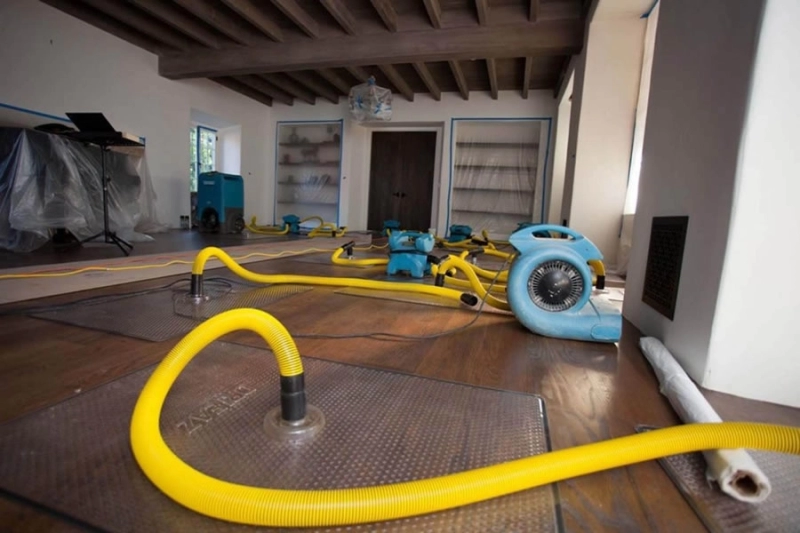
Dehumidifiers help, but placement and run time are critical. A single box-store dehumidifier in a room with wet wall cavities won’t reach the moisture trapped inside the framing. Professional drying equipment includes industrial air movers, desiccant or refrigerant dehumidifiers, and cavity drying systems that target the moisture inside the structure. Technicians also use thermal imaging cameras and pin-type moisture meters to confirm that readings have returned to normal dry levels before equipment is removed.
Skipping professional water removal after a serious leak is what leads to mold discovery three months later during a renovation or home inspection. At that point, what should have been a water damage restoration project becomes a mold remediation project on top of it, with a higher price tag and a longer timeline.
Are You Worried About Hidden Water Damage?
A musty smell is a sign that water has been in your structure long enough for something to grow. Hidden moisture behind walls and under floors causes more damage per day than the original leak. If your home has had a persistent odor, a known leak, or recent water intrusion of any kind, don’t wait for visible damage to confirm what the smell is already telling you. Contact Tidal Wave Response for a professional moisture assessment. We locate hidden water, perform complete water removal, and carry out full water damage restoration. Our team is fast and thorough. We also document everything so you have what you need for your insurance claim and peace of mind.