
Why Immediate Water Removal Is Critical After a Flood or Leak
Call Now – (404) 900-3852
CALL US BEFORE CALLING YOUR INSURANCE COMPANY – Let us work directly with your insurance company to get your loss covered.
Standing water inside a home starts causing secondary damage within hours, not days. Flooring, drywall, insulation, and framing absorb moisture fast. Once mold takes hold, the scope of the project changes. Tidal Wave Response deploys water removal teams quickly because the window to limit damage is narrow, and every hour counts. Keep reading to find out what happens to a home’s structure during prolonged water exposure, how professional extraction differs from consumer equipment, and why response time is the single biggest factor in how much a water damage restoration job ends up costing.
What Happens to Your Home in the First 24 Hours After Water Intrusion
Water doesn’t stay where it lands. Within minutes of a flood or leak, water migrates laterally under flooring, wicks upward through drywall, and saturates subfloor materials. Hardwood floors begin to cup and buckle within hours. Drywall paper softens and quickly loses structural integrity, making it a ready surface for mold colonization.
By the 24-hour mark, moisture has usually penetrated multiple layers of building material. Carpet padding traps water beneath the surface while the top layer appears to be drying. Insulation inside wall cavities holds moisture against wood framing, where it can’t be seen and won’t dry without mechanical intervention. The damage is happening in spaces that a visual inspection won’t catch.
Engineered wood products are particularly vulnerable. OSB subfloor can begin to swell and delaminate within a day of sustained water contact. Once that structural layer is compromised, the repair scope expands beyond extraction into full subfloor replacement. The longer the water sits, the more the project grows. Concrete slabs and tile may look unaffected while moisture migrates into the adhesive and substrate layers beneath and creates hidden damage that shows up weeks later as loose tile or efflorescence.
The Point at Which Water Damage Becomes a Mold Problem
Mold spores exist in virtually every indoor environment at low levels. They become a problem when they land on a wet surface with an organic food source, which is exactly what wet drywall, wood framing, and insulation provide. Under the right conditions, mold colonies can establish within 24 to 48 hours of water exposure.
What makes this timeline dangerous is where the mold starts. It doesn’t grow on visible surfaces first. It grows inside wall cavities, under flooring, and in insulation, where humidity levels stay elevated long after surface materials appear dry. Once you see discoloration on a wall or smell something musty, the infestation is already well established in concealed spaces.
Mold remediation is a separate, more expensive process from water damage restoration in Sandy Springs. It requires containment, negative air pressure, antimicrobial treatment, and disposal of contaminated materials. Extraction and drying within the first 24 hours isn’t a guarantee against mold, but they dramatically narrow the window during which colonization becomes probable. If you delay past 48 hours in a humid environment, remediation becomes likely.
Why Consumer Wet Vacs and Fans Fall Short of Professional Extraction
A standard wet vac pulls water from the surface it can physically reach. It doesn’t extract moisture from the bottom layer of carpet padding, from within engineered wood products, or from the lower courses of drywall. It removes what’s visible and leaves the rest. Box fans move air across surfaces but can’t do anything about humidity levels in the space or moisture inside wall assemblies.
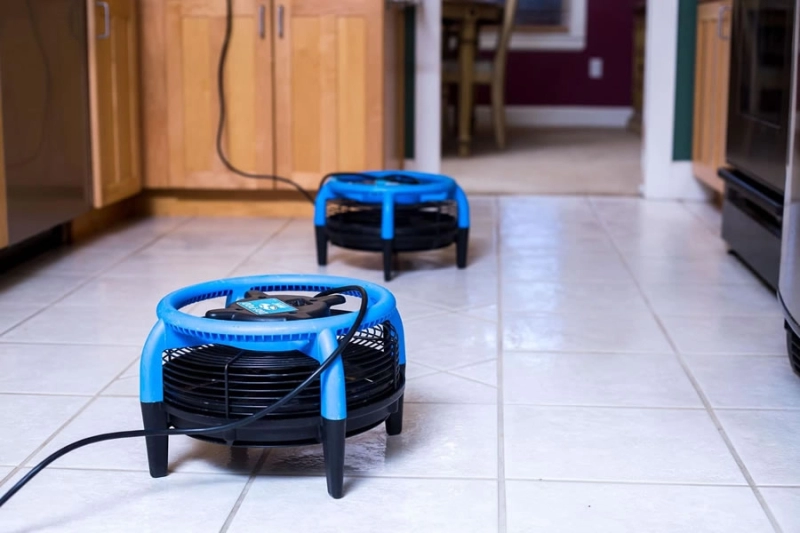
Professional water removal equipment operates on a different principle. Truck-mounted extractors generate more suction than portable consumer units and can remove water from carpet, padding, and subfloor in a single pass. Industrial air movers are positioned to drive airflow through structural cavities, not just across the floor surface. Refrigerant and desiccant dehumidifiers pull moisture out of the air as it evaporates from building materials, which is what lowers the moisture content of structural components.
The difference shows up in the drying timeline. A structure that’s dried with consumer equipment may appear dry on the surface in three to four days, while the moisture content inside the wall framing and subfloor remains high. Professional equipment with moisture monitoring achieves structural drying to acceptable levels in the same timeframe, with documentation to confirm it. Insurance companies often require documentation to support claims. Consumer equipment can’t provide it, which can complicate the claims process and leave homeowners responsible for damage their insurer would otherwise cover.
How Fast Response Affects Your Total Restoration Cost
The cost difference between a job started within hours and one started two to three days later is not marginal. Water damage restoration scopes expand in proportion to how long materials stay wet. Flooring that could have been dried in place requires tear-out and replacement after extended saturation. Drywall that might have dried with air movers needs to be cut out and replaced once mold is present. Here’s how the scope usually escalates with delay:
- Under 24 Hours: Extraction, drying equipment, and moisture monitoring. Flooring may be salvageable depending on the material type.
- 24 to 48 Hours: Higher probability of subfloor damage, greater likelihood that drywall will need to be removed, and extended equipment rental.
- Beyond 48 Hours: Mold remediation may be needed, and structural components will probably require replacement.
Most insurance policies cover sudden and accidental water damage but include language about the policyholder’s obligation to reduce further damage. Waiting days to initiate water removal could give an insurer grounds to dispute the portion of damage that occurred after the initial event. Documenting fast professional response protects the claim and gives adjusters a clear record of when work began and what conditions were found at the time of arrival.
Furniture, flooring, and personal property absorb water and deteriorate on the same timeline as structural materials. Items salvageable with fast extraction become total losses after extended exposure. A professional water damage restoration team documents contents conditions on arrival, which supports replacement claims and demonstrates due diligence to the insurer.
Do You Need Professional Restoration Services?
Tidal Wave Response provides water removal and water damage restoration with speed and attention to detail. If your home has taken on water, call us immediately. Every hour you wait narrows your options and expands your costs. We arrive fast, determine the full extent of water intrusion with professional meters, and begin extraction before the damage gets worse.